
We are All Adopted
For years my wife and I have enjoyed a KBYU program called Relative Race, something we discovered via Rootstech many years ago.
It is a reality TV program that isn’t really about the competition. Four teams, comprised of two people, “race” to meet relatives they have never met before.
In most cases, they are folks who have been adopted, raised by others, and they discover their birth parents or family they have never known.
They race to distant cities, complete some kind of game or puzzle known as a challenge, then complete their daily journey by finding their relative’s house where they meet their unknown family members.
That’s when the heart of the program kicks in. Here is a moment of a woman meeting her biological father for the first time:
See a Woman Meet Her Biological Father via YouTube (Click on the Watch on YouTube link)
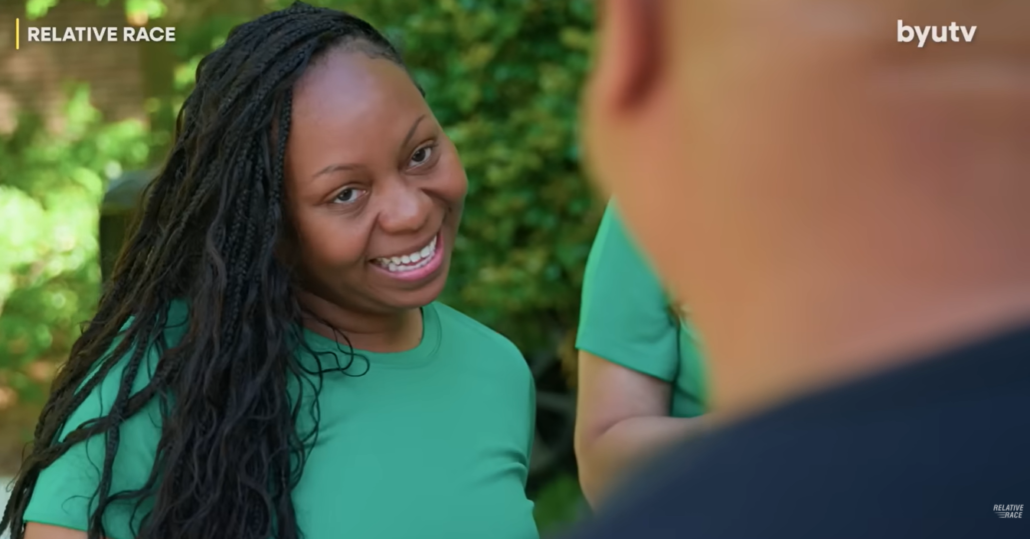
We have enjoyed this show for years. The stories are always compelling. In most instances, the backstories are redeemed in moments like shown in the video above. In almost every case, they are stories of individuals who through adoption struggled with issues of identity and acceptance.
After watching this recently it a truth dawned on me:
We are all adopted.
~ The Family We Never Meet ~
What is the difference in the absence of a family member known to us living during our lifetime and family members who came before us that we never get to meet in this life?
In my view, there is and there is not a difference.
I consider the story of my mother.
She was born in January of 1943 and within about a month of her birth her father, my Grandpa Carl, left for the war, never to return.
After the war my grandmother remarried and the man she married, Pat Caldwell, became my mother’s step-father – a classic case of adoption.
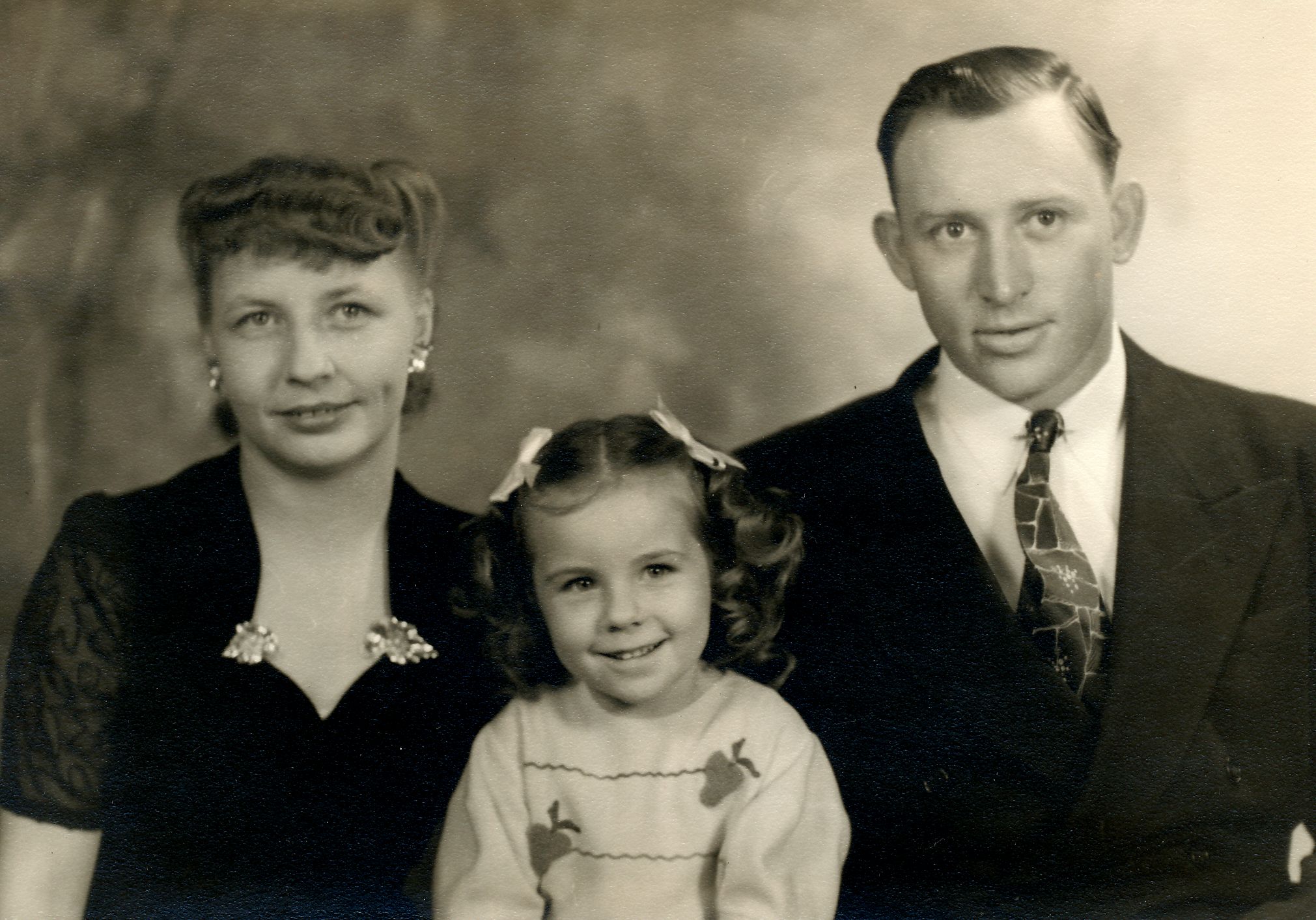
1946, my mother with her mother and her step-father
My Mom used to tell the story of going to school for the first time and hearing her name attached to her biological father.
She had not heard it before and it was incomprehensible to her five-year-old mind.
Her Daddy was the man she knew at home – not the stranger whose last name she didn’t recognize.
That’s when Mom’s identity crisis began. Questions entered her brain and deep feelings began to grow in her heart. She would spend the rest of her life pondering them and addressing them.
Like so many adopted folks, it all happened without Mom’s involvement in any way. She was innocent. It just happened. It became her story.
For my Mom, unlike in the video above, the meeting with her biological father didn’t happen in this life. It happened in the next one.
But are the lessons, the feelings, the redemption any different than what we see in the video?
This is why I say we’re all adopted.
We can’t possibly know those who came before. We can learn about them from records, journals, stories, and photos. We might get a little more from people older than us who knew those family members of the past. But at the end of the day we’re separated by circumstances of time and death from knowing those family members.
The reunions, if we can call them that, await a more perfect day.
~ What Happens When We Meet the Family We Don’t Know? ~
On Relative Race, competitors meet their long-lost family members and then sit down to talk.
They are all seeking answers. They share information and ask questions they have never been able to ask before. These conversations are world-shattering in most cases.
It extends beyond parents. Sometimes, cousins, aunts and uncles, and especially grandparents, endure consequences from circumstances that lead to separation from biological family.
When connections are finally made, stuff happens:
See this young woman meet her biological grandparents. (Click on the Watch on YouTube Link)
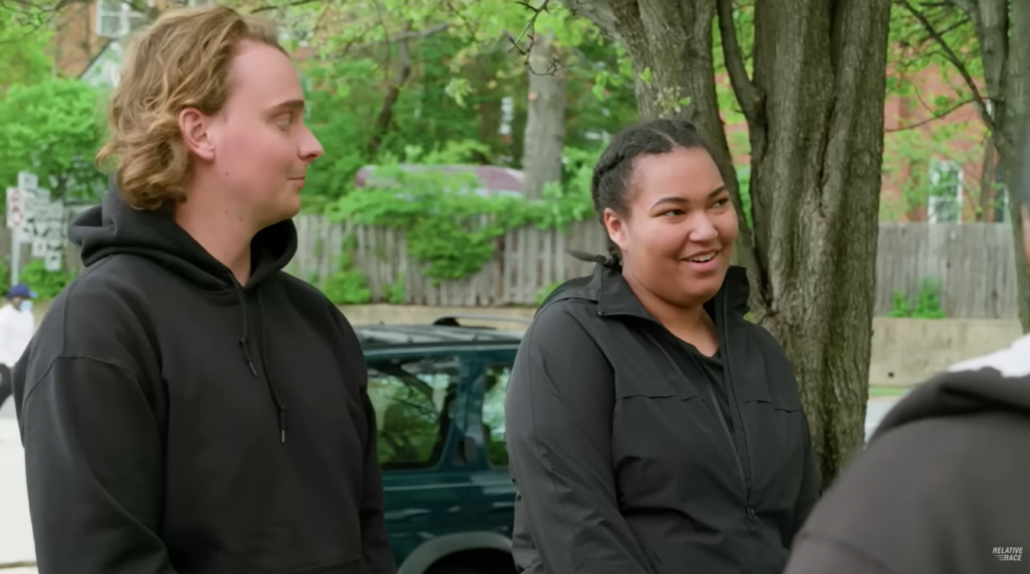
Can our conversations with our cherished dead be anything different?
I have long imagined what my Mother’s conversations were like when she got to the other side.
She lost her biological father when she was a baby. Her own mother passed when Mom was just 24. Her grandparents on her mother’s side passed long before Mom was born, and her grandparents on her father’s side she never met.
They were all waiting for her when she transitioned from this world into the next.
What did they say to each other? What happened in those first moments? And what has happened since?
Of course, there is a big difference between meeting family in this life and meeting them in the world-to-come.
For the woman in the video above she has the chance to now have the influence of her biological father in this life. And in the other video, it’s her grandparents. They can share the here and now. They can have that relationship, albeit late, in this life.
That is a significant difference.
And there are clearly two sides to that relationship. The daughter now has her father in her life. And he now gets to be her father. She was the adopted one, most impacted by the absence of her biological father. But he too suffered an absence. And he has a different perspective.
~ Seeing the Other Perspective ~
I was raised with both of my parents and with the influence of all my grandparents. I have been blessed.
I have known many others, my Mom being just the first, who came from an upbringing under a step-parent or parents who are not biological. These types of situations have always been common.
For those I know who had step-parents or who were adopted I’ve observed some consistent things, mostly feelings of disconnection, of rejection, of not feeling wanted. Likewise I have observed that when connections to lost family are made there are expressions of feeling more complete, of belonging, of answers found for “why I am the way that I am”.
Identity is important to us all, no matter what our journeys of discovery are. Who we connect to, whether by adoption or birth, is important.
But what about the experiences and feelings of those biological parents who give up their children?
And, in the case of someone like my Grandpa Carl, what have his experiences and feelings been in not having the chance to see my Mom grow-up and to not have that relationship as her earthly father?
What could he have felt? And what was that reunion like for him when my Mom reached him at last on the other side?
~ Why Identity Matters ~
As I have explored the many people and stories of my family history have experienced within myself great change.
I try to express that change on these pages.
I never feel, within me, that I fully can describe how important those changes are, or how deep. Or how meaningful.
I’m a wordy guy and I just cannot find the words.
There is no satisfaction with my lack of adequate expression about these things. What’s it like? Why can’t I explain this?
Having experienced some life changes these past six months I have had some time to work on some long-planned family history projects, one of which has been the simple art of putting more family pictures on the walls of my home.
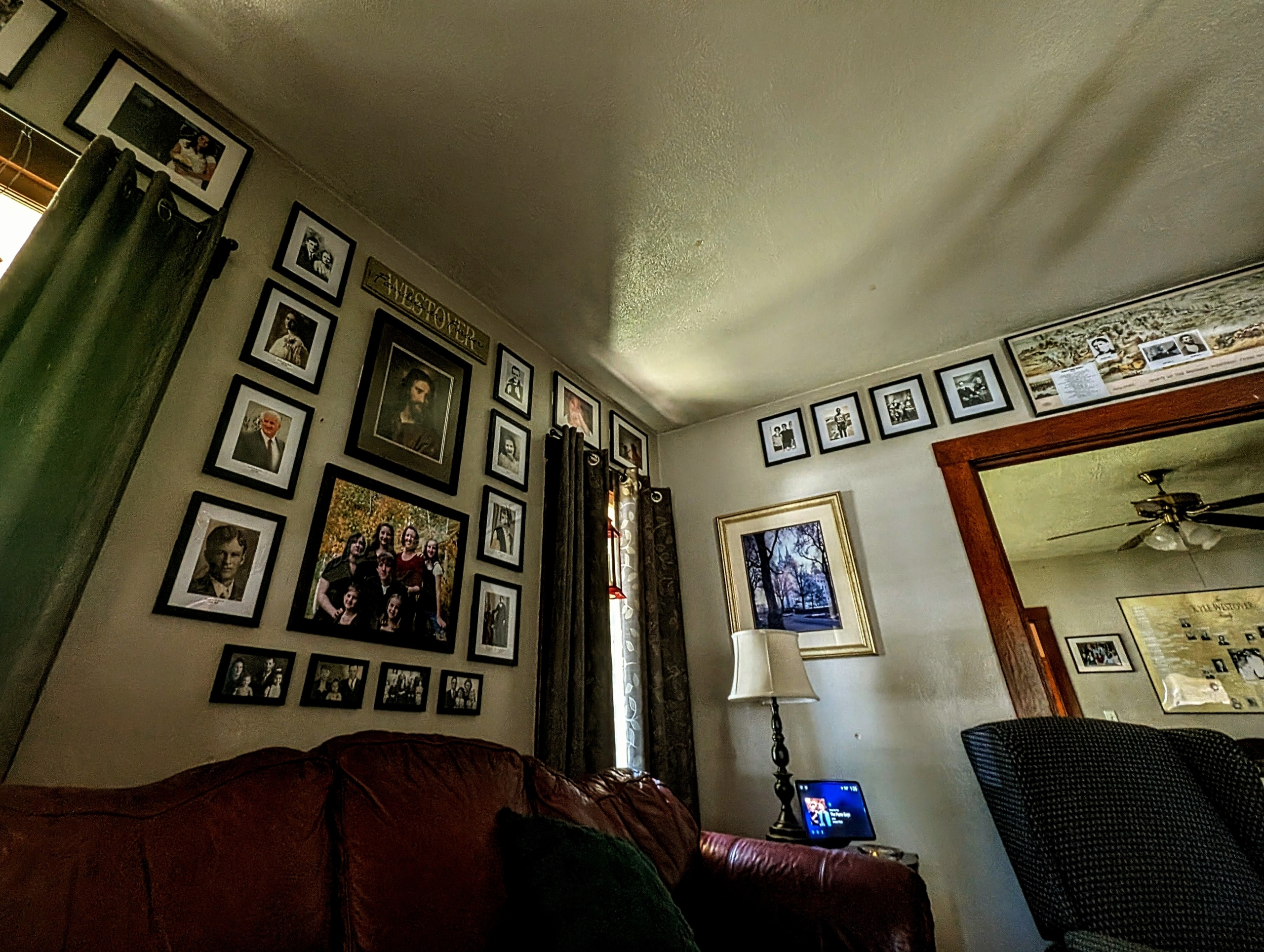
These aren’t just wedding photos from long ago of me and my wife, or the baby pictures of all of our children. My ambition has been to include photos of all my ancestors, grandparents, aunts and uncles, and present-day cousins on my walls. It is a work in progress.
My intent has been to create an environment of family curiosity in my own home. I want when people visit for there to be questions and conversations. Who is that? Who are they to me? What is their story?
This is the same kind of exercise that comes from my ancestor Christmas tree, where I have photo ornaments of family members that my grandkids can pick and choose from when they come at Christmas time. I want people to see these pictures, ask those questions and make those natural connections.
The surprise in all this, as it always happens, is my own emotional response to just connecting via something as simple as a picture.
When placing a photo of Grandpa Albert Smith with Grandma Sophie, I cried. When placing a picture of Grandpa Carl on a wall with my Grandma Westover, I wonder now if they have met on the other side.
When putting up eight generations of Westover men in pictures – my grandson Damon, my son Enoch, me, my father Kyle, my grandfather Leon, his father Arnold, his father William, and his father Edwin – I marvel at how much we look similar and how much I love each one of them for their unique stories.
Other than those who lived when I have lived, I haven’t met them. Yet I love them.
How is that possible? What is that?
This is why we can all relate with the adopted. The pursuit of answers of identity are the same for each one of us. And the lessons in it all are profound.
These things have been impressed upon me by being a step-father myself.
I’m not one yet to share my personal history much on these pages. I’ve written some of it and here and there I work on it, but my efforts on these pages focuses on our family past.
But I make an exception in this case because I feel this is really important.
When Sandy and I met the very first thing I learned about her is that she had a child. In fact, Aubree was the first reason I fell in love with her mother.
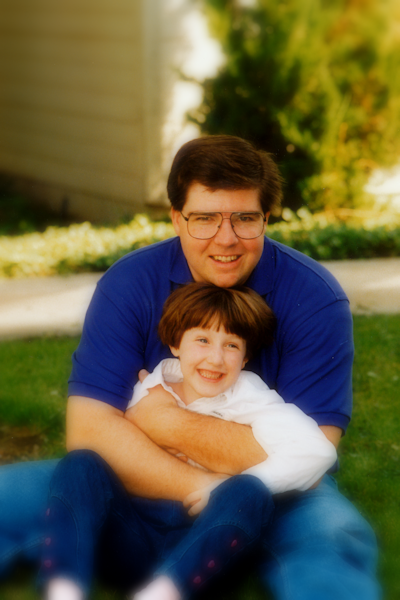
While I never expected to meet and marry a woman with a child I very quickly learned that I had no reason to fear it. It was very much a spiritual experience as Sandy shared with me her story and her daughter. I felt for certain I could be the father Aubree was missing in her life, just as much as I felt I could be the husband my wife was seeking. I wanted that opportunity.
I had no clue how challenging it would be.
I had no idea that she, as a child, would feel different or experience anything different than the other children Sandy and I would have together.
I never supposed that my best efforts — genuine, heartfelt, intentional efforts – would fall short in helping Aubree to feel as loved, wanted and accepted as she needs to feel.
I never anticipated struggling with my own feelings of keeping Aubree as no different than my other children. I didn’t think I would have to work harder at being her Dad than being Dad to all of our other children.
And every bit of that is true, if I’m being honest.
To be adopted is rough. To be the adopter is not easy either.
The complications over the situation are staggering, confusing, frustrating and at times debilitating. Those real-world complications lead to stress, depression, feelings of being helpless and inadequate, and moments of total despair.
The years of this experience as a step-father have given me pause as I consider other adoptive or step-parenting situations in our family history.
Of course, I can never know the feelings or complications of the situation between my Mom and her step-father, or of those family members who as children lost their parents.
I know those complications exist nonetheless. They have to.
Does that mean I don’t weep when I put up pictures of Aubree on my wall? Of course I do. I love her. I don’t have to say I love her as my own because she is my own. She is every bit as much a part of me as all our other children.
Her story has shaped my story. My identity has been defined by her in my life.
How I feel about myself – my accomplishments, my purpose, and my intent now as a father to adult children – is very much tied to her as my eldest child.
Love is what makes all that true.
But there’s stuff there to take care of – stuff that has nothing to do with me.
She has a whole other side of her family picture to resolve. The “turning of the hearts” of the children to the fathers means she’s got a path to walk that puts different pictures on her wall. And that’s a tougher walk than my own.
I haven’t been able to fill that hole in her life. And I am learning that it isn’t my hole to fill, as harsh as that sounds.
It is the journey of the adopted. And we all take the journey in different ways. It’s natural. There are reasons for it.
~ The Curse ~
The “turning of hearts” is fraught with misunderstanding. It comes from the final verse in the Old Testament, from the 4th chapter of Malachi:
And he shall turn the heart of the fathers to the children, and the heart of the children to their fathers, lest I come and smite the earth with a curse.
The mystery and the misunderstanding comes from the word “curse”. What does that really mean? Joseph Smith received a slightly different expression of this scripture from Moroni:
He also quoted the next verse differently: And he shall plant in the hearts of the children the promises made to the fathers, and the hearts of the children shall turn to their fathers. If it were not so, the whole earth would be utterly wasted at his coming.
This subtle difference is significant. It speaks of God’s intention with the turning of our hearts. It makes it a necessity. In other words, it is something we are supposed to experience.
In fact, it suggests that we must experience the turning of hearts. If we don’t, Christ’s coming again would only lead to destruction. Why and how?
Learning who we are – our identities – through the studies of our ancestors shapes not only who we are but how we act, how we choose, and who we become.
Realizing this – each one of us, some with singular situations – is vital to knowing who are are as eternal beings. Joseph called it “a welding link” – a connection in families that teaches us the sacred value of the eternal soul. Christ is our Savior but he intends to save us in families. The hearts must turn because they are vital to understanding our eternal (and thus divine) nature.
It is almost as if God has intention for us in our development as His children. We are heading somewhere. Becoming something.
Becoming.
That’s an expansive theme, isn’t it? It is profoundly meaningful.
And I think it goes far to explain why we feel what we do as we seek out those who are part of us in any way.
Even for those of us who are step-parents or adoptive parents. There is definition found within those roles. Understanding. Knowledge. Intelligence. Power. This is the influence of “turning” hearts. It makes us discover the most sacred things within us.
Turning.
Turning – a verb. An action. Dare I say a change within us?
Yes, we are all adopted.
We are all seeking the truths of identity, the turning of hearts, in seeking out our dead. Or our living.
- We are All Adopted - June 14, 2026
- The Life of Lewis Burton Westover - May 24, 2026
- Our Family History of Family History and Temple Work - April 16, 2026
