
Arizona: Sarah Jane Burwell Westover
I have been negligent in producing a feature about Sarah Jane Burwell Westover.
I have been wanting to defer to those who are her descendants and I have spoken with some of them over the years.
There are many who want to know more about her. Sadly, there isn’t much out there outside of her being by Edwin’s side from a very young age. But her part in the Arizona portion of our family story compels me to share at least what I know.
~ Sarah Jane ~
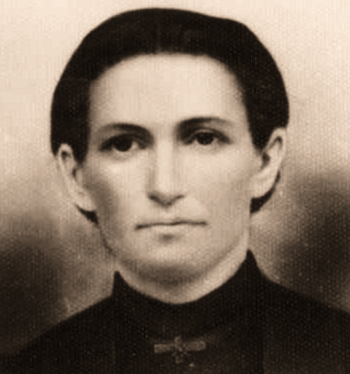 Sarah Jane Burwell was the youngest child of Joseph and Sarah Burwell. She was born in Wayne, Ohio on January 29th, 1833.
She was the youngest of six daughters and was born just 9 months before the untimely death of her father, Joseph, according to the history of her mother, Sarah Jane Bleeks Burwell.
From 1833 when Sarah Jane Burwell’s father Joseph died until about 1842 we do not know what Sarah Bleeks Burwell did to survive or what the childhood of Sarah Jane Burwell was like.
In 1842 Sarah Jane Burwell would be about 9 years old. In the summer of 1842, in Franklin County Ohio, her mother, Sarah Bleeks Burwell, remarried. Her new husband was Dr. William Amos Morse.
Dr. Morse was a respected physician and in time would become known as “the best herbalist in Utah”. His first wife died in March 1842 and in marrying Sarah Bleeks Burwell he would blend his family with hers.
At this time in the general area of Franklin County, Ohio missionary work was active. Dr. Morse, the Burwells, Hannah Beal Brown, Adeline Brown, and Electa Beal Westover, all converted to the Church.
Edwin Ruthvin Westover would marry in 1844, becoming father to Edwin Lycurgus in 1845. When his first wife Sarah Sophia Darrow suddenly died a few months after Edwin Lycurgus was born, Edwin Ruthvin too joined the Church.
Missionaries and emerging elders in Ohio included the 20-year-old James Willard Bay, 40-year-old Aaron Sceva, and 70-year-old John Kempton all had ecclesiastical and friendly association with the Morse, Burwell and Westover families who populated a growing branch of the Church.
After visits to Nauvoo, particularly by Bay and Morse, the decision was made by the branch to unify with the Church ahead of migrating west.
At this time, Edwin Ruthvin Westover was about 24 and Sarah Jane Burwell was just over 15. In February of 1848, before beginning their journey, Edwin Ruthvin and Sarah Jane were wed. Edwin Lycurgus was just shy of 3 years old.
Moving the branch, which was made up of several families, was complicated and expensive. Resources were combined, especially by Dr. Morse and the Burwell family, to pay for travel to the main gathering of the Church and to outfit all parties for the trek west.
The largest issue the branch faced was where to join the main body of the Church. After the martyrdom it was unclear just where the main body of the Church was. Some felt to go to Nauvoo, others to Missouri and word had reached the branch of a gathering place known as Winter Quarters, which was north of Omaha in an area later to be known as Florence.
The decision was made to head in the direction of Missouri and they joined an emigrating group under the direction of Apostle Ezra T. Benson near St. Louis. This apostle would take them to Council Bluffs.
The entire branch named above became embedded in Brigham Young’s Company, which numbered more than 1200 people. They had, by early May of 1848, moved out of Winter Quarters to Council Bluffs, where they were staged for the migration west.
The time period between the martyrdom of Joseph and Hyrum Smith and Brigham Young’s ascension to the Presidency of the Church of Jesus Christ of Latter-day Saints is crucial to understanding the maturation of young westward pioneers such as Edwin and Sarah Jane Westover.
Brigham’s experience in trying to lead a people during this time frame is well documented. He struggled to gain control not only over the physical organizing challenges but also the spiritual changes required of the entire body of the Church he was trying to move west.
He was under the influence of a steady flow of dreams where Joseph Smith appeared to him. He was learning as well to receive revelation, such as D&C 136, where he was told the “mind and will of the Lord” for the Camp of Israel.
There are many excellent resources available to study the post-Nauvoo time-frame and Brigham’s 2nd journey west in about a year’s time in 1848. I encourage any study of our family history to include those resources to more fully understand the circumstances of family before the Utah settlement period.
Consider the heart of 15-year-old Sarah Jane Burwell in 1848.
While we lack full details of her personality and all she really passed through, what could be the outcome of her trek west as a newlywed, an instant mother to Edwin Lycurgus Westover, and a fairly recent convert to the Church?
Especially consider that every female role model in her life was sharing this pioneering experience with her.
Her mother, Sarah Jane Bleeks, was also newlywed and headed to Zion in the Brigham Young Company. Her mother-in-law, widow Electa Beal Westover, who had been caring for young Edwin Lycurgus and as well was a recent convert, was there. So too was Electa’s sister, “Aunt Hannah”, there. These older women were no doubt influential for Sarah Jane.
Also there was Martha Burwell, who was only 3-years older than Sarah Jane, yet unmarried at that time and traveling with the company.
Think also of the men she was getting to know. Her husband, Edwin R. Westover, was just 9-years older but just as new in the Church.
Erastus Snow, not quite yet an Apostle, was just beginning his association with the Westover family. Young Charles Westover was his teamster for this journey.
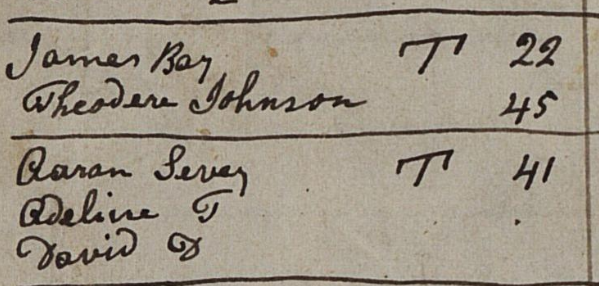
1848 Pioneer Log showing James Bay and Aaron Sceva as teamsters
All of these older women and men who would influence young Sarah Jane Burwell Westover were there during these early days of her now-adult experience. They, along with the pioneering experience itself during this time, would later influence Sarah Jane’s decisions in Arizona.
~ Growing the Westover Families ~
The Brigham Young Company arrived in “Great Salt Lake City” in September 1848. There was little time for them to prepare for winter.
The Westover’s – which included Edwin and Sarah Jane, mother Electa, and brother Charles Westover – settled into an assigned area in the 9th Ward. Living at first in the “old fort”, the Westover’s would go on to develop their city property and later, their assigned farm in Big Cottonwood.
While in Salt Lake, Sarah Jane gave birth to her first-born, Sarah in 1849. A second child, Ulrich, a boy, would be born in 1850. A third, daughter Electa Jane, would come in 1853.
Another child, William Albert, would be born in 1854 and live just a week. A year later, in 1855, daughter Laura Maria was born while the family was still in Big Cottonwood.
Then came the crucial year of 1856. The Mormon Reformation, which dominated the years of 1856-57, brought a change for 23-year-old Sarah Jane Westover. Now she would evolve from the influenced to the influencer of other women.
In February 1857 Edwin Ruthven Westover would marry Ann Findley, an 18-year old handcart pioneer from Scotland. Sarah Jane would be her mentor at the age 24 and a mother of five.
We lack details of what this was like for anyone in the family at the time. What did they feel? What did they think?
We don’t know.
But in the case of the families of Edwin Ruthvin we know this: they lived together and would progress together for the next 12-years.
In January 1858, Sarah Jane gave birth to daughter Ella Angelia – in Grantsville. In September, Ann would bring forth her first born, Emma Jane – in Big Cottonwood.
In April of 1861, Ann would bring forth her first son, William Ruthven, in Mendon, Cache County, Utah. In January 1862, in Grantsville, Sarah Jane gave birth to son Rupert Wilton Westover.
These facts of the growing family tell us that family on every side continued to be a resource. Edwin’s mother – Electa – was a steady presence in the lives of her in-law children and grandchildren.
Her sister, Aunt Hannah, who lived in Grantsville and stayed there for years, was frequently called upon. Edwin and his families would move there for a period of time from 1858 until around 1862, before being “called” to the Cotton Mission in southern Utah.
Edwin, Sarah Jane and Ann and their families would move to Shoal Creek, a quiet and small community northwest of St. George that would be renamed Hebron. They would spend about 4 years there before relocating to the nearby settlement of Hamblin. Edwin worked raising sheep, including church herds.
During these years several children would be born.
To Sarah Jane, Joseph Ernest, Arthur Leo and Florence Rebecca would come into the world. Several babies – Amos Alexander, Amy Amelia and Orson Edgar would be born but did not survive.
To Ann, Mary Ellen and John Henry would come into the world.
Again, we don’t know the personality, the feelings or the experiences of Sarah Jane or Ann during these years in Hebron and Hamblin together. We know that they were very poor and that the pioneers in these areas depended upon each other. Their industry was vital to survival. Edwin would raise sheep and cattle, selling wool and taking cowhides to St. George to have shoes made for his families.
In 1869 devasting news arrived for Ann.
Her brother William Findley, at the age of 38, suddenly passed away in Mendon, Utah. He left a wife and five children and a farm. Ann’s parents later came to St. George to bring Ann home to Mendon with them, when she was expecting her 5th child.
This split up Edwin’s two families to the extreme borders of Utah Territory. Sarah Jane and her children were down by the Arizona border while Ann and her children we up by the Idaho border.
We also know this: all of Edwin’s wives and children remained active in the Church. Ward records in Hamblin and Mendon confirm that. In 1870, Edwin traveled to Mendon in order to bless his 5th child with Ann – and it would be the last time they would see each other.
There is evidence of letters that traveled between Hamblin (where Edwin was the postmaster) and Mendon. Families stayed connected by letter.
Children also grew up. By 1870 Emma Jane, Ann’s eldest, was 12 years of age. Sarah, eldest of Edwin and Sarah Jane, was now 20 and newly married to Moroni Canfield.
Edwin Lycurgus, Edwin’s oldest child, was now 25 years old and a man in his own right. Around this time he moved to Grantsville, where according to his history he was called upon to help manage the farm of Aaron Sceva, husband to Adeline, daughter of Aunt Hannah.
The 1870s were a time of change for Edwin, Sarah Jane and Ann. Their children were advancing. So too would their worlds.
In nearby St. George, a temple was announced and was under construction. Edwin and most of the men now living in Southern Utah all donated time and resources to the new temple.
And Brigham remained focus on growing the kingdom, which would affect them all in moves to Arizona.
~ Family in Arizona ~
Up in Grantsville, Edwin Lycurgus would marry and begin his family.
In his prime at around age 30 he and several other families were called to help settle Arizona, an effort that began for them in 1876. He loaded up his young family and every supply he could think of and arrived in Arizona in the spring to establish residence.
But he with some others left in the fall of 1876 to go back to St. George, where the temple was soon to be dedicated. The temple dedication briefly brought all the family together.
Around the time of the temple dedication Edwin received a new mission call to settle in Arizona. Edwin and Sarah Jane soon began to liquidate their property in Hamblin to relocate. Edwin traded his property for a wagon and livestock to son-in-law Moroni Canfield, and with Sarah Jane and children in tow he headed for Kanab, where they would meet up with the John Hunt Company.
The children had typhoid fever some time before they left Hamblin and Edwin came down with it on their journey. Insisting he was well and could travel, his condition worsened.
Being December there was some urgency for the Hunt Company to get to Snowflake, Arizona, where Hunt had just been called to be Bishop.
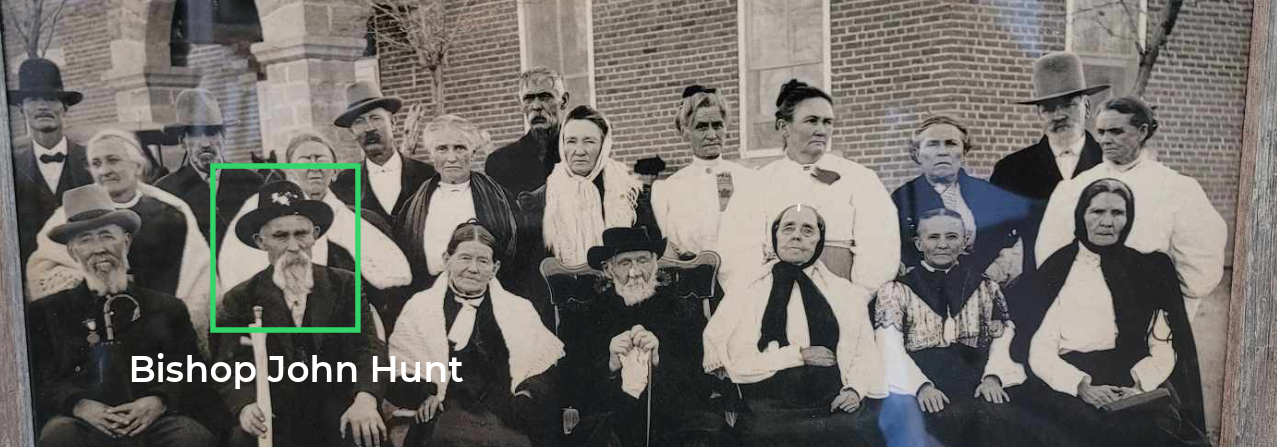
The reunion photo from our first post about Arizona shows Bishop John Hunt, who led the company to Arizona that Edwin and Sarah Jane and family were part of.
But Edwin faltered. He was not getting better. They were just east of Kanab when Sarah Jane took him to the Johnson farm in what is now called Johnson Canyon.
For three weeks they tarried there until Edwin’s pneumonia worsened. Before he died, Edwin expressed his desire for Sarah Jane to continue on to Arizona as he felt their call there was as a family.
~ Sarah’s Decision ~
Sarah was left in a terrible situation. There she was, hosted by the Joel Hills Johnson family, having just buried her husband in the Johnson family cemetery.
Her four living children were Rupert Wilton (Will), age 16; Joseph Ernest, age 14, Arthur Leo, age 12 and little Florence Rebecca – Florry, they called her – just age 6.
Should Sarah Jane continue on to Arizona, as Edwin had admonished?
Her options were many: she could return to Hamblin, where her married daughter Laura remained. She could go to St. George, and live with Edwin’s brother Charles and her mother-in-law, Electa.
Another daughter, Electa Jane, was now married and living in nearby Freedonia, Arizona. Perhaps she could have gone there.
Sarah Jane’s mother and Dr. Morse had long ago passed away in Parowan, but her sister Martha had become a plural wife to Horace Alexander and was raising her large family in Springville.
She could also have returned to Grantsville, which still had many family connections.
Sarah Jane did none of these things.
Histories conflict about the call of the Edwin Westover family. Joseph Ernest’s history suggests they had been called to help settle San Lorenzo, New Mexico. That settlement was on the Arizona/New Mexico border but it was soon abandoned due to poor growing conditions.
The next settlement in eastern Arizona was in Taylor, situated just a few miles away from Snowflake.
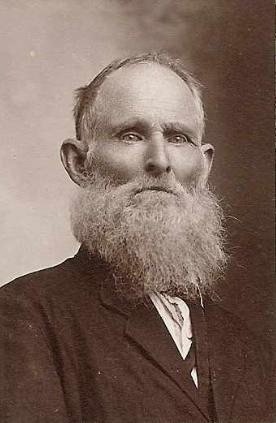
Bishop John Henry Standifird of Taylor, Arizona who aided the Westover family when they settled there.
How it was determined that Sarah Jane and her family would settle there is not known. But Taylor had it’s own Bishop named John Standifird, who would be named in several histories as an aid to Widow Westover and her children.
Sarah Jane’s oldest boys – Will, as Rupert Wilton was known, and Joseph Ernest – would hire out regularly on Bishop Standifird’s ranch. This was just one way the family survived.
Sarah Jane would live 5 years in Taylor, passing away at the age of 51.
Her only published obituary was in the Deseret News, which only mentioned she was a faithful Latter-day Saint.
What else could it be called besides faith that caused Sarah Jane to press on to Arizona? She had pioneered Salt Lake, Grantsville, Hebron, and Hamblin. How could Arizona be any worse?
It may have been THE worst for Sarah Jane. It was desolate. She was without her husband. Her children were all she had.
Arizona, for them, would prove in time to be a land of opportunity. The decision to go there and fulfill the mission given to the family would affect generations.
Daughter Ella, who married in St. George during the family’s temple gathering in 1877, would take in her two youngest siblings, Arthur Leo and Florence Rebecca, upon Sarah Jane’s death in 1884. They would be raised in Arizona. Ella and her husband would spend their adult lives and raise their family in Arizona.
Will (Rupert Wilton) would marry a Willis descendent in 1882. They would raise their family in Arizona.
Joseph Ernest, who’s teenage years managing livestock in Taylor led to a career as a teamster, married in Arizona and raised a large family.
Arthur Leo would live with Ella for a few years before going to Texas on a mission, where he served with distinction. He would later marry and raise his family in Arizona.
Florry spent her teenage years in the home of Ella and Alonzo and then returned to Hamblin to marry Benjamin Platt. They had their family in Hamblin before returning to Arizona for the rest of their lives.
The long consequences of Sarah Jane’s and Edwin’s decision to pioneer Arizona have been manifest in their legacy in the generations born since.
Sarah Jane’s story is first in this series because her story was the simplest to tell.
Plural marriage, unlike most the others, did not factor. She never remarried and was not a plural wife to another in a caretaker situation.
Years before, when someone asked Brigham why the Saints left Missouri, he answered saying, “We left voluntarily – because we had to”
This would exactly describe why Sarah Jane left Utah and pioneered Arizona. She proved faithful to her family, her Church and the circumstances she was faced with every day of her life.
She is just one of many incredible pioneer women we claim as honored and beloved.

- The Family Quest of Joseph and Wilford - March 24, 2026
- My Friend Will Harvey - March 9, 2026
- Arizona: Kurg and the Doctrines of Marriage and Adoption - January 19, 2026

